Two names keep coming up in Islamabad investment circles this year: Faisal Town DHA Gandhara. One is a busy, half-built society near Thalian that you can actually drive through. The other is a heavily marketed project riding on one of Pakistan’s biggest real estate names. Most people compare prices and land on a verdict within five minutes.
That’s the wrong way to do this.
The question isn’t which project “looks” better. It’s which one gives you the right mix of price, location, development, paperwork, and risk for what you’re actually trying to do. Someone with a modest budget and a five-year plan isn’t making the same decision as someone with deep pockets who wants to start construction next year.
One more thing most articles conveniently skip. The information available on these two projects isn’t equally solid. One has a track record you can check and a site you can walk through. The other has a massive online footprint but surprisingly thin official documentation once you get past the marketing pages. That gap matters more than any rupee figure floating around online.
Faisal Town Phase 2 vs DHA Gandhara Phase 9 at a Glance
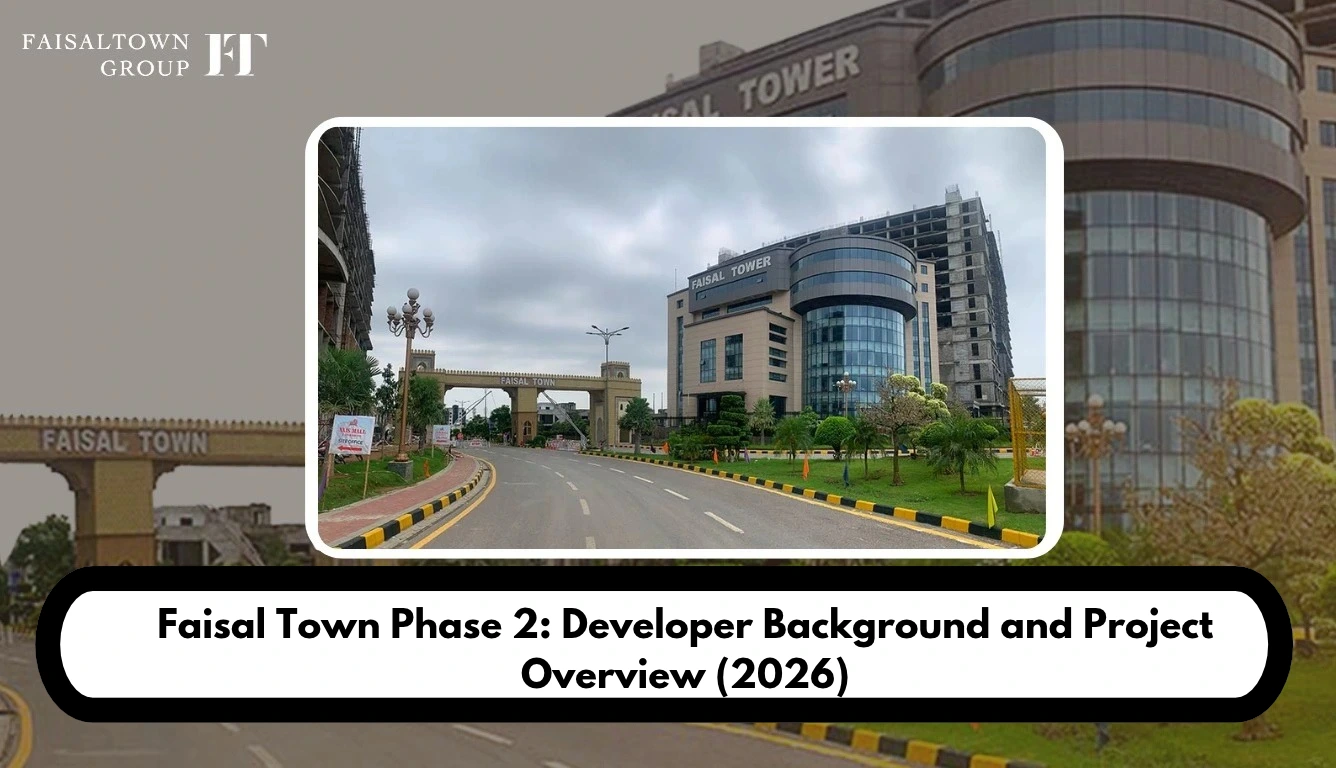
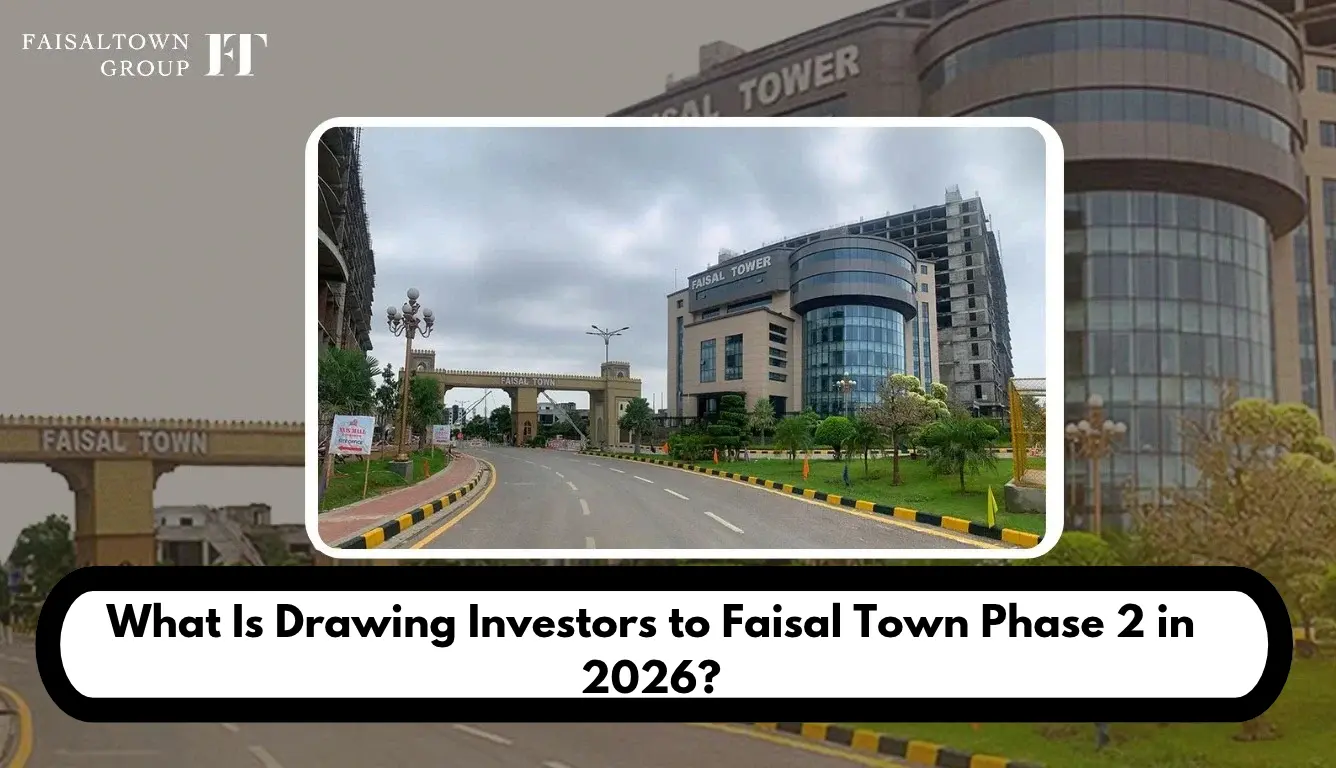
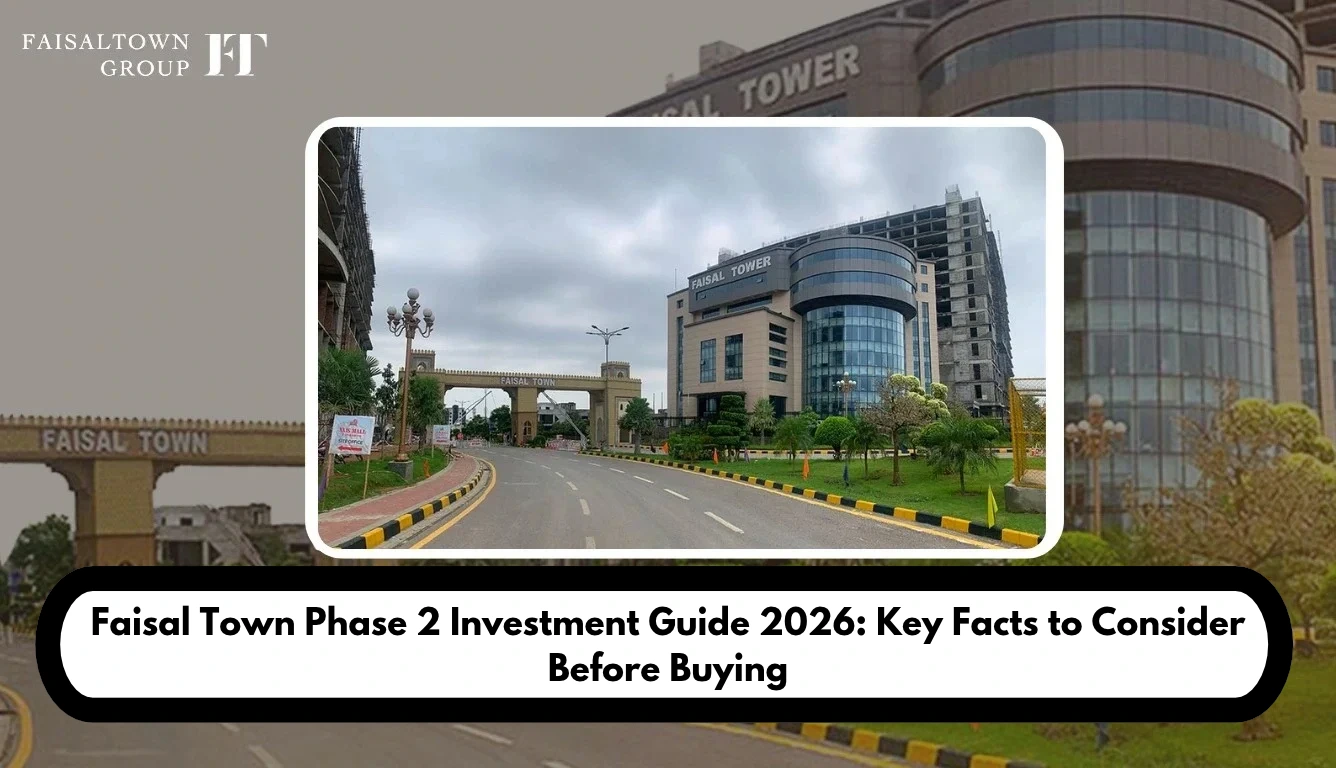
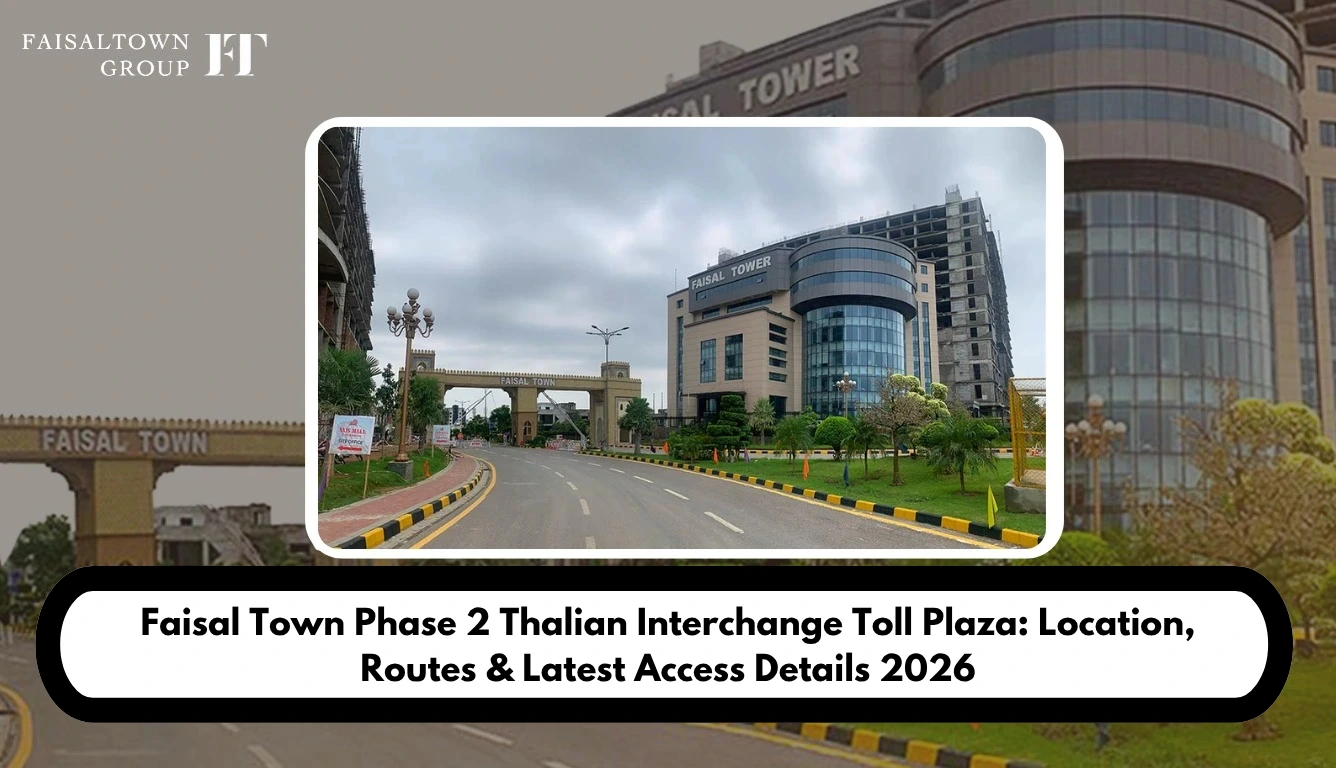
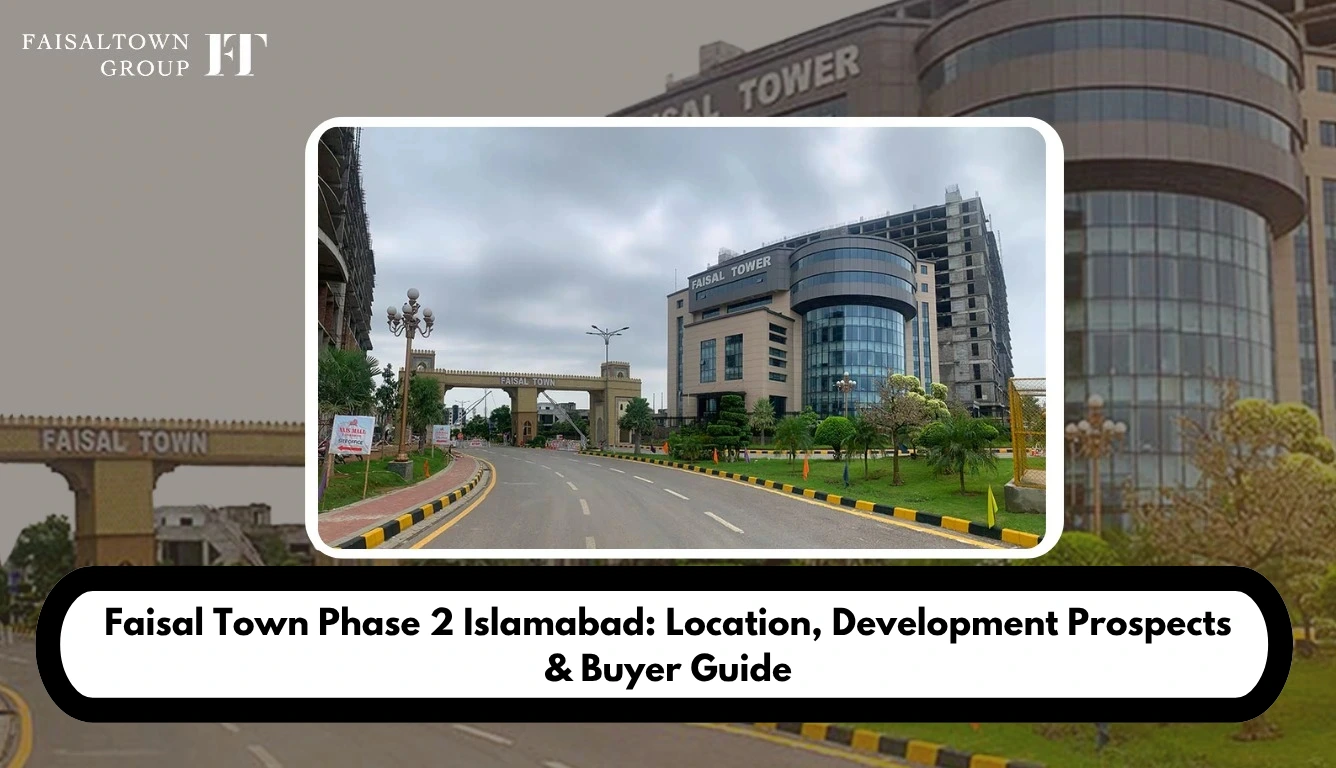
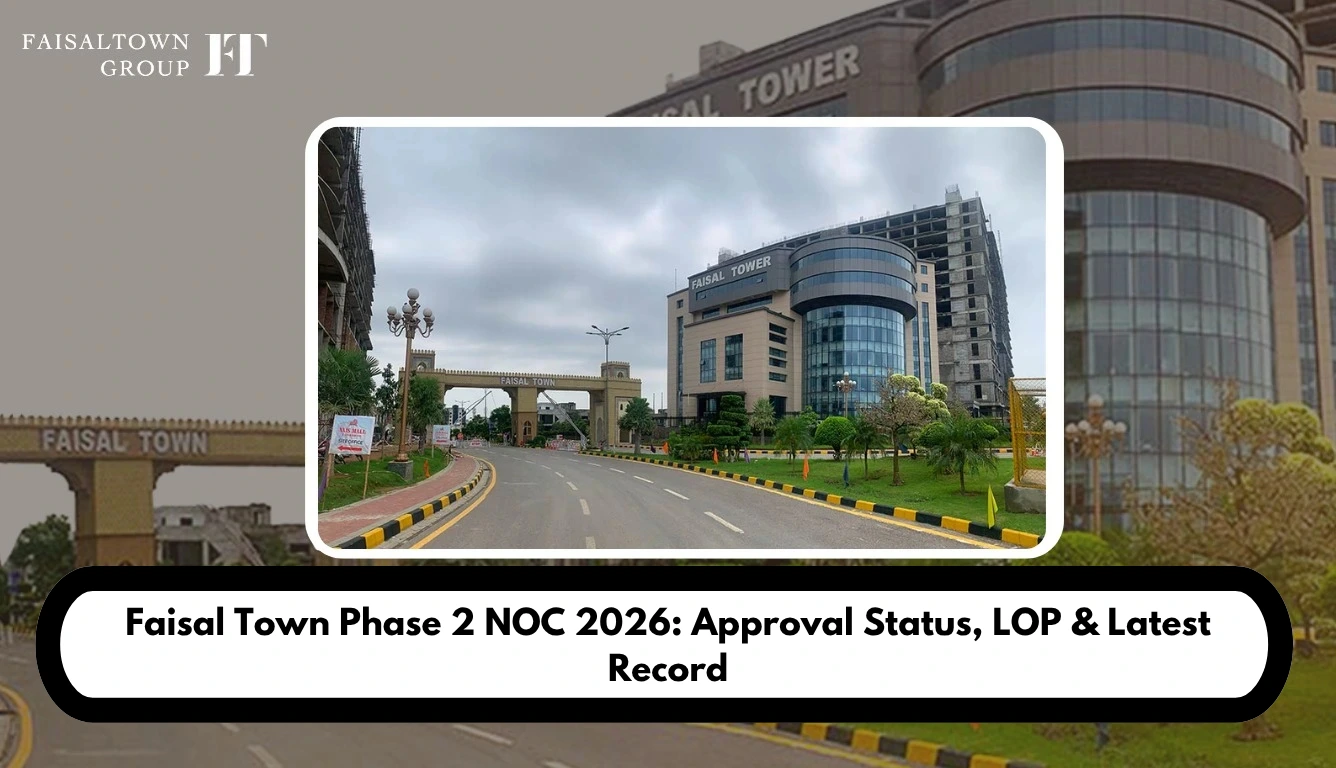
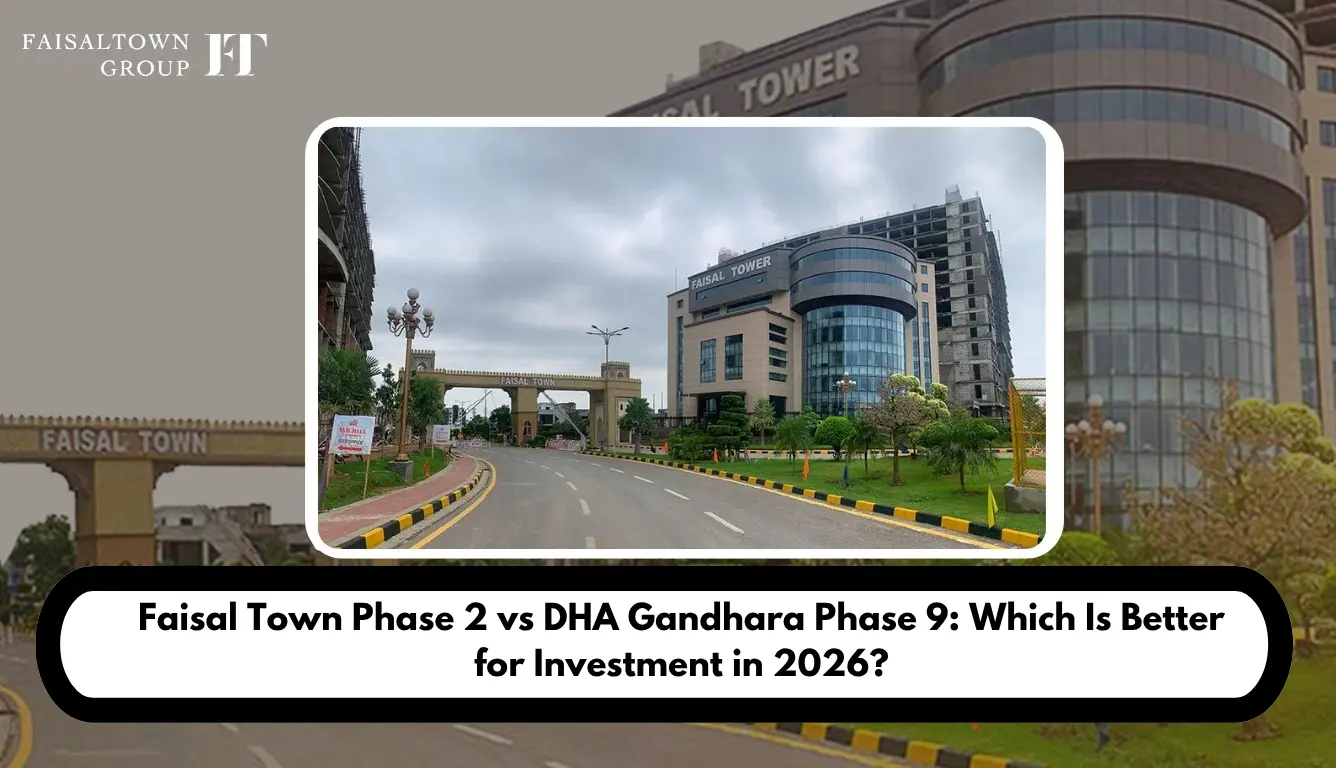
Faisal Town Phase 2 sits on the M-2 corridor near Thalian Interchange, under Rawalpindi district. Development is real, it’s just uneven; some sectors are miles ahead of others. 2026 reporting shows earthwork, boulevard construction and utility work happening in Sector O and N Block. RDA hasn’t approved the NOC yet, it’s still under process. Entry cost is relatively low, especially on instalments. This is a development-stage bet, meaning you’re carrying approval risk and execution risk at the same time.
Property portals market DHA Gandhara Phase 9 as DHA Islamabad Phase 9, and some also call it Gandhara City. It sits along M-2 and the Chakri corridor near Capital Smart City. Third parties describe it as a massive master-planned scheme, with Surbana Jurong doing the planning and HRL on the ground. Prices online swing wildly depending on the source, which should raise an eyebrow on its own. Most of what’s out there is dealer and marketing material, not anything from DHA directly. Honestly, the DHA name is doing most of the work in convincing people to buy in.
One thing before we go further: you can’t fairly compare these two until you know exactly what you’d be buying and which papers actually back it up. A file isn’t a plot. A master plan isn’t roads. And online buzz isn’t approval, no matter how convincing it sounds.
Why Compare Faisal Town Phase 2 and DHA Gandhara in 2026?
The M-2 corridor has turned into the busiest stretch of new development around Islamabad. Chakri Road, Thalian, the airport belt, all of it is packed with societies fighting for the same buyers. Rawalpindi Ring Road only added fuel to that, promising to reshape how people move through the whole southern belt.
Buyers have gotten warier too. A few years back the only question was “how far is it.” Now people ask about NOC status, possession dates, how easily they can sell later. That shift didn’t come from nowhere; too many buyers got burned by societies that looked incredible on a brochure and delivered almost nothing once they actually went and looked.
More competition also means louder marketing. When six societies chase the same buyer along the same road, claims get bigger and vaguer at the same time. So the real 2026 question isn’t which is closer to the airport. It’s which asset actually holds up once you strip the noise away and look at what’s documented.
Faisal Town Phase 2 vs DHA Gandhara: Location and Connectivity
Faisal Town Phase 2 sits near Thalian Interchange on the M-2, with Chakri Road, the airport, and Rawalpindi Ring Road all within reach. Getting to Islamabad usually means the motorway and airport corridor. Getting to Rawalpindi leans more on Chakri Road. Check the Faisal Town Phase 2 location page before assuming anything; sectors sit at very different distances from the actual entry points, and not every block here is equal.
Current Ring Road Access
A lot of buyers slip up on one distinction. Being near Ring Road doesn’t mean direct access to it. Reporting so far suggests the complete Thalian interchange is being built separately from the Ring Road sections already working, with temporary routes covering the gap for now.
Verify the road you’ll actually be using, not the one that looks closest on the map.
DHA Gandhara Location and Access
DHA Gandhara is described as sitting along the M-2, in the Chakri belt, right next to Capital Smart City. Some sources throw around a dedicated interchange, seven-minute airport access, and five-minute Ring Road access.
Nearly all of that comes straight from marketing pages, so treat it as a claim, not a fact, until DHA’s own paperwork confirms it.
There’s a naming issue too. “Gandhara City” and “DHA Gandhara” get used as if they’re the same thing, and that’s not something to just assume. If a dealer switches between the two names, ask which one your file is actually tied to.
Current Access vs Future Access
Current access versus future access is where Phase 2 pulls ahead. It already has working interchanges, roads, and entrances you can use today. Gandhara leans much harder on what’s coming later.
That’s fine for a project at this stage, but it should be priced like what it is: a bet on the future, not the present. A location can look great on paper five years out and still be a pain to actually reach today.
Right now, Phase 2 wins on that front.
Faisal Town Phase 2 vs DHA Gandhara: NOC, Approval and Documentation
Faisal Town Phase 2 NOC Status
Faisal Town Phase 2 falls under RDA jurisdiction. Every current source describes its NOC as filed and under process, not issued, and it’s not on RDA’s list of approved societies. Track the NOC status yourself, then confirm it independently through RDA before handing over money.
The developer, Chaudhry Abdul Majeed via Zedem International, has a solid delivery record from earlier projects like Phase 1, and that counts for something. Still, there are limits to that track record. A developer’s past success can’t substitute for this project’s own approval. Every phase needs its own clearance, full stop.
DHA Gandhara Phase 9 Legal Status
Property portals widely market DHA Gandhara as DHA Phase 9 and link the project to DHA, HRL, and the Army Welfare Trust. Published payment plans and “NOC-approved” language also appear across numerous property pages.
At the same time, independent research keeps asking whether a Phase 9 or Gandhara listing actually appears in DHA’s own published records and price sheets. The wildly different prices floating around only make that question louder. We’re not saying it’s fake. There isn’t enough evidence for that.
What we can say is simple: confirm DHA’s current status straight from DHA before treating any branding, pricing, or dealer stock as official. Ask specifically for the document naming the phase. If no one can produce it, that tells you something too.
Does the DHA Name Automatically Make the Investment Safer?
Brand matters, no question. It shapes confidence, helps resale, and can pull in end-user demand that smaller societies may struggle to match. People pay more for that name, and that’s not crazy on its own.
However, a brand can’t verify title. It can’t confirm that your file matches a real allotted plot, and it can’t replace a layout approval or ownership record. A strong name may reduce how risky something feels, but it does not automatically reduce the underlying risk.
Faisal Town Phase 2 vs DHA Gandhara: Prices and Affordability
Faisal Town Phase 2 vs DHA Gandhara: Prices and Affordability
Something most buyers don’t think about: the same plot can carry six different prices. The developer’s booking price. The cash price after discount. The instalment price, almost always higher once you add it up. The file price for something not even allocated yet. The actual plot price, once there’s a real number and location. Finally, there’s the resale asking price, which is simply whatever the seller hopes someone will pay.
None of these figures mean the same thing. That’s exactly why buyers and dealers so often argue in circles without realising they’re quoting two different numbers.
Faisal Town Phase 2 Price Position
Faisal Town Phase 2 sits at the cheaper end of the corridor, generally with a four-year instalment plan and a lump-sum discount option. Plot options range from 5 Marla to 2 Kanal.
Check the payment plan directly, then compare it against our 2026 price breakdown. Sector, block, and category can shift the number quite a bit. Never take a dealer’s figure as gospel unless it’s backed by a dated developer rate sheet.
DHA Gandhara Price Position
DHA Gandhara’s pricing is, frankly, a mess. Some sites quote around PKR 5.5 million cash and PKR 7.45 million on instalments for 1 Kanal. Others mention a pre-launch file demand near PKR 60 lacs, plus membership and tax charges. Development charges may add another 20 to 25 lacs.
Then there’s talk of an expected launch price near PKR 1.55 crore, including development charges. That spread alone tells you these are market guesses, not one confirmed DHA rate. Before trusting any number, ask which document it comes from and what date is on it.
What Should You Verify Before Paying?
Before paying anything on either project, run through the basics. First, confirm whether you are buying a file or an actual allocated plot. Then check whether possession is genuinely available or simply promised. Finally, verify that the specific block has actually been developed.
Also check whether charges are already included or coming later. Confirm whether you’re buying on cash or instalments. Find out if the asset can be transferred right now and through which office.
Finally, ask the question dealers often avoid: who is going to buy this from you a few years down the road? Our file vs plot guide goes into this properly. In many cases, these details can matter more than the location alone.
Plot Sizes, Capital Requirement and Investment Comparison
Faisal Town Phase 2 has residential plots from 5 Marla up to 2 Kanal, commercial plots on the main boulevard, and a separate Overseas Enclave built for non-resident buyers.
Smaller plots bring the entry cost down and widen the pool of people who might buy them from you later. DHA Gandhara is advertised with plot sizes from 5 Marla to 1 Kanal. However, that remains an advertised range until DHA finalises and confirms its own category structure.
Payment Burden and Capital Requirement
Total price isn’t the same thing as cash-flow pain. Upfront booking, ongoing instalments, and later charges such as development fees, transfer costs, and taxes can quietly strain a buyer who could technically afford the plot on paper.
Balloon payments deserve particular attention. A plan can look comfortable because the monthly instalment is low, yet the larger periodic payments may create the real financial pressure.
Entry Price and Investment Position
So how do the two actually stack up as investments? Faisal Town Phase 2 has a lower entry price, and that’s not simply generosity. It reflects factors such as pending approval and uneven development across different areas.
Gandhara’s pre-launch pricing also looks cheap compared with its expected launch figure. However, the exact gap between the current market and any future launch price is where much of the speculation lives.
Location and Accessibility
Location-wise, Phase 2 leans on Thalian and the Ring Road corridor. Gandhara leans on Chakri and its proximity to Capital Smart City. Right now, Phase 2 has the stronger usability case because buyers can see more of its surrounding access and development on the ground.
Over the longer term, both sit within the same broader M-2 and Ring Road growth corridor. That puts their long-term location potential on a similar footing, but buyers should not confuse planned infrastructure with access they can use today.
Development and Documentation Risk
Development is easier to check in Phase 2 today, mainly because you can drive over and see parts of it for yourself. Documentation risk deserves the same weight as location, and arguably more.
Phase 2 has a known approval risk that buyers can track through RDA. Gandhara’s situation is less clear because the bigger question is what exactly you would be buying and under whose authority.
That distinction matters. A known risk is easier to investigate and plan around than one you cannot clearly define.
Brand, Demand and Resale Liquidity
Brand strength genuinely helps DHA on resale and end-user appeal. However, that is a market perception, not proof of a project’s legal or documentation status.
Demand and liquidity currently favour Phase 2, which has an observable resale market through sectors such as Sector X and N Block.
Gandhara’s file trading depends more heavily on pre-launch sentiment. That sentiment can change quickly if the official launch, pricing, documentation, or development story does not match market expectations.
Capital Appreciation Potential
As for appreciation, nobody can promise anything here. The outcome will depend on entry price, legal clarity, actual development, infrastructure, and genuine buyer demand.
A strong brand can influence sentiment, but it cannot create value on its own. Ultimately, the better investment is the asset where the price, documentation, development and demand make sense together.
Risk Summary
Faisal Town Phase 2 carries regulatory risk since the NOC is pending, development risk from uneven sectors, timing risk since schedules tend to slip, and liquidity risk from a smaller buyer pool before approval lands.
DHA Gandhara carries documentation risk as the main issue, speculation risk from pre-launch pricing, development risk from the gap between what’s advertised and what’s actually verified, and liquidity risk since early-stage inventory doesn’t necessarily behave like a fully established DHA phase.
Who Should Buy Which
End users should put possession first, then check roads, electricity, water, sewerage, population, schools, and healthcare. Neither project is a settled, mature society yet. Phase 2’s developed pockets, helped along by amenities like the Hanif Medical Complex, are further along.
Long-term investors need to weigh entry price, documentation, development, and demand together. Phase 2 works for this crowd if you go in with eyes open about the approval risk; our investment fundamentals piece covers what to track while you hold. Gandhara can work for a long horizon too, but only once someone actually verifies its status.
Short-term investors care about liquidity more than anything else. Neither of these is a quick flip, and a short exit window just magnifies whatever documentation gaps already exist.
Faisal Town Phase 2 makes sense if you want a lower entry, development you can go look at yourself, and you’re fine holding medium to long term while approval sorts itself out. Check the features against what’s actually on the ground, not just the master plan. Skip it if you need possession now or you’re working on a short timeline.
DHA Gandhara only makes sense if you can independently verify its DHA connection and trace your specific file back to something DHA recognises, and you’ve got both the capital and patience for early-stage risk. Don’t buy in just because it says DHA on the sign. Check the paperwork first, every single time, no exceptions.
What to Verify Before Buying Either Project
Legally: NOC or approval status, land ownership, layout approval, any litigation, and whether whoever’s selling actually has the right to sell. On the property itself: file or allocated plot, plot number, block, sector, and confirm possession and demarcation in person. Financially: a dated official rate sheet, the full payment schedule including development and transfer charges, and read the cancellation and refund terms before you sign, not after. On development: road, electricity, water, sewerage, and gas status for your specific block, not the society in general. And on paperwork: booking form, allotment letter, payment receipts, transfer documents. Our buyer guide walks through this step by step.
While on site, check the entrance, drive the internal roads, look at drainage, and see if the machinery is actually working or just parked there for the photo. Walk to your plot and confirm the demarcation yourself. Drive the real route to the nearest working interchange during peak hours, not at 11pm when there’s no traffic. Don’t trust a Google Maps pin as proof of anything.
Final Verdict
There’s no universal winner here, and anyone who tells you otherwise is skipping the part that actually matters. Faisal Town Phase 2 makes more sense if entry price matters to you, you want something development-stage you can go check yourself, and you can hold for years while accepting the NOC uncertainty with your eyes open. DHA Gandhara makes more sense if institutional branding genuinely matters to you, you’re willing to verify its status independently, and you’ve got both the capital and the patience for early-stage risk.
For end users: possession, utilities, and legal clarity come before branding or master plans, every time. For investors: the best opportunity is rarely the cheapest project or the loudest name. It’s whichever one actually has price, documentation, development, location, liquidity, and risk all lined up together.
FAQs
Q1: Is Faisal Town Phase 2 better than DHA Gandhara for investment in 2026?
Ans: Depends on your budget, your horizon, and how much risk you can stomach.
Q2: Which has the better location?
Ans: Both sit on the M-2 and airport corridor. Phase 2 connects more directly to Thalian and Ring Road; Gandhara markets itself around the Chakri belt. Road usability matters more here than kilometres on a map.
Q3: What is the Faisal Town Phase 2 location?
Ans: Near Thalian Interchange on the M-2, in Rawalpindi district, close to Ring Road. Confirm distance from your specific block, not the society as a whole.
Q4: Is Faisal Town Phase 2 NOC approved?
Ans: No. Still filed and under process with RDA as of now. Verify directly with RDA before you pay a rupee.
Q5: Is DHA Gandhara Phase 9 officially approved?
Ans: We couldn’t independently confirm this through any authoritative DHA document as of writing. Ask the seller for the actual DHA document naming the phase.