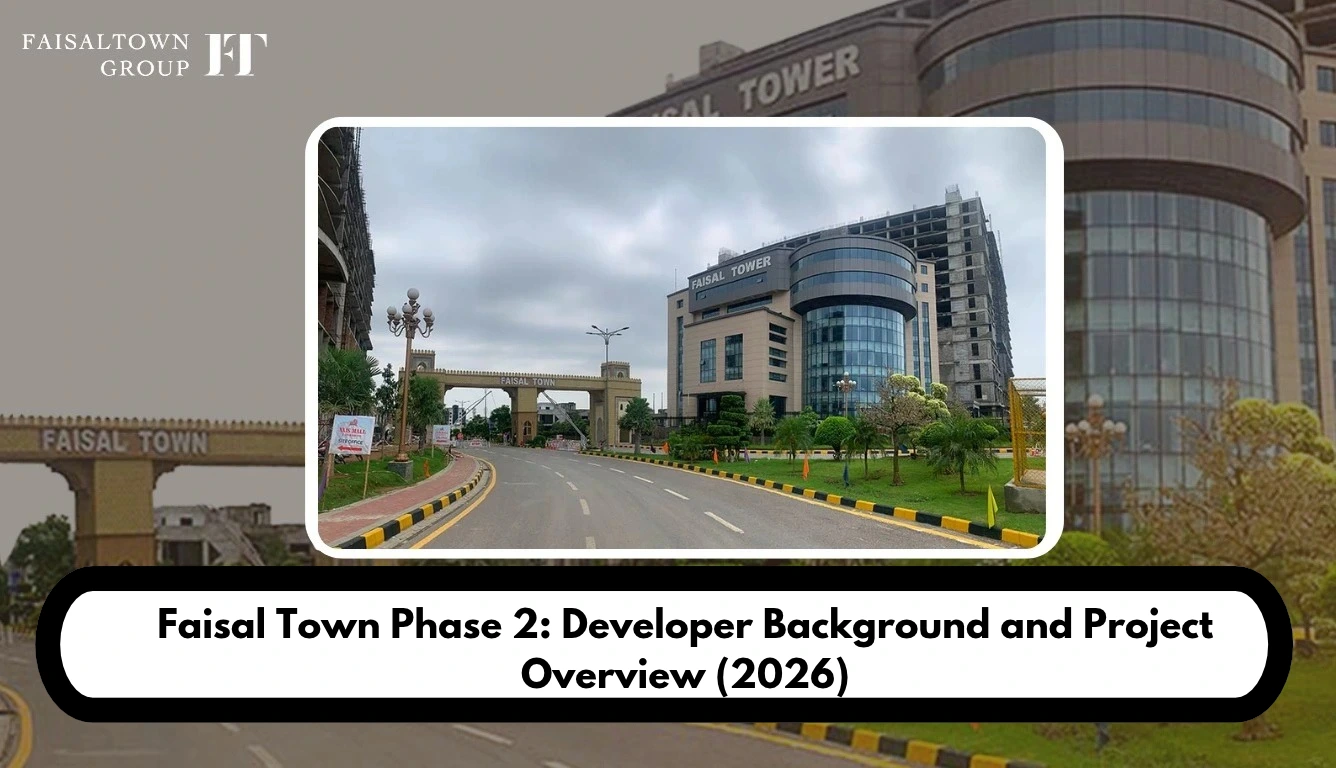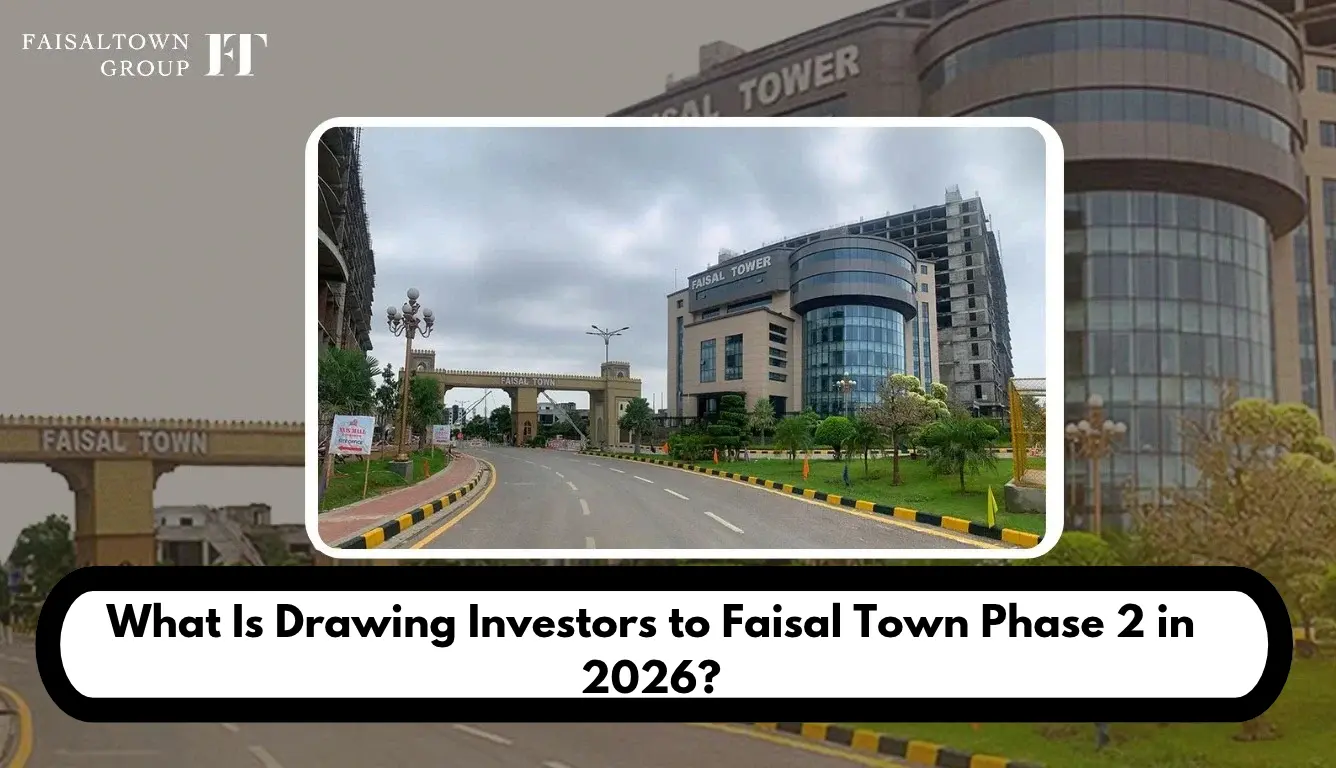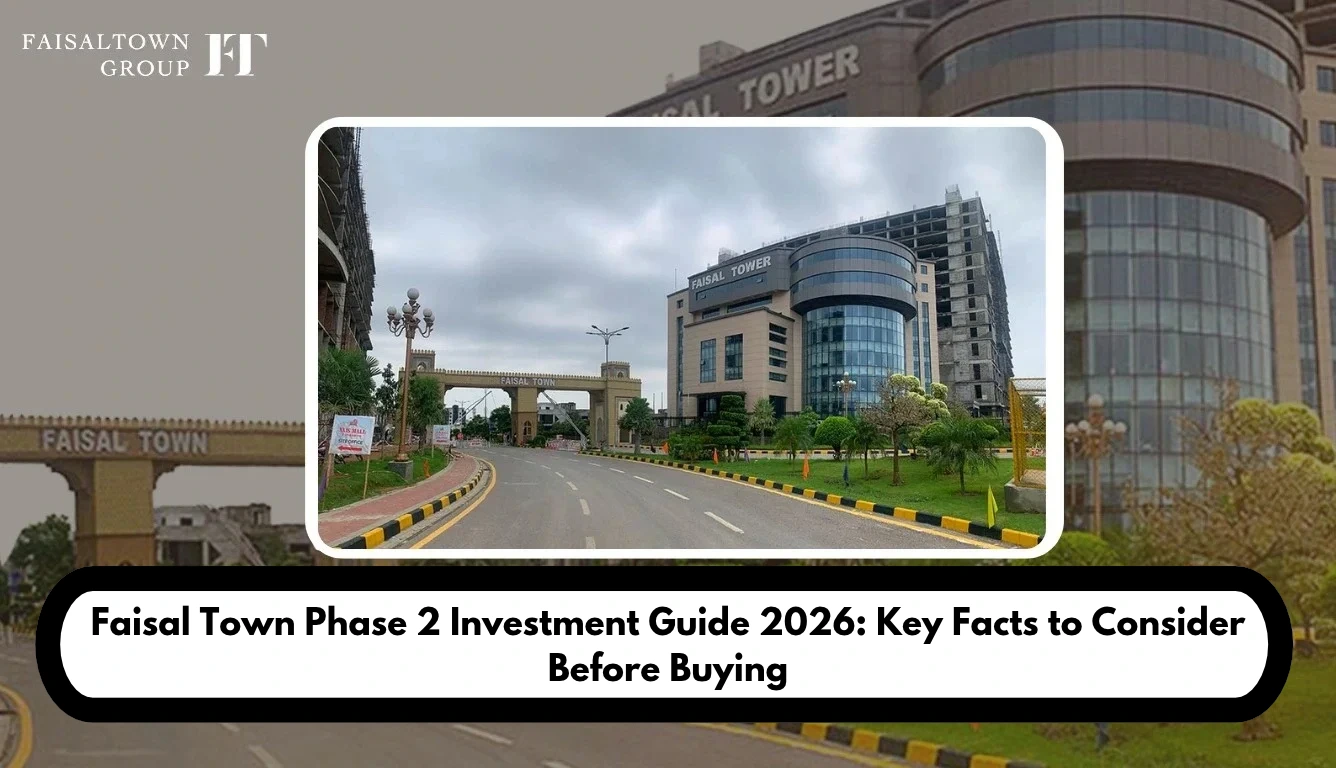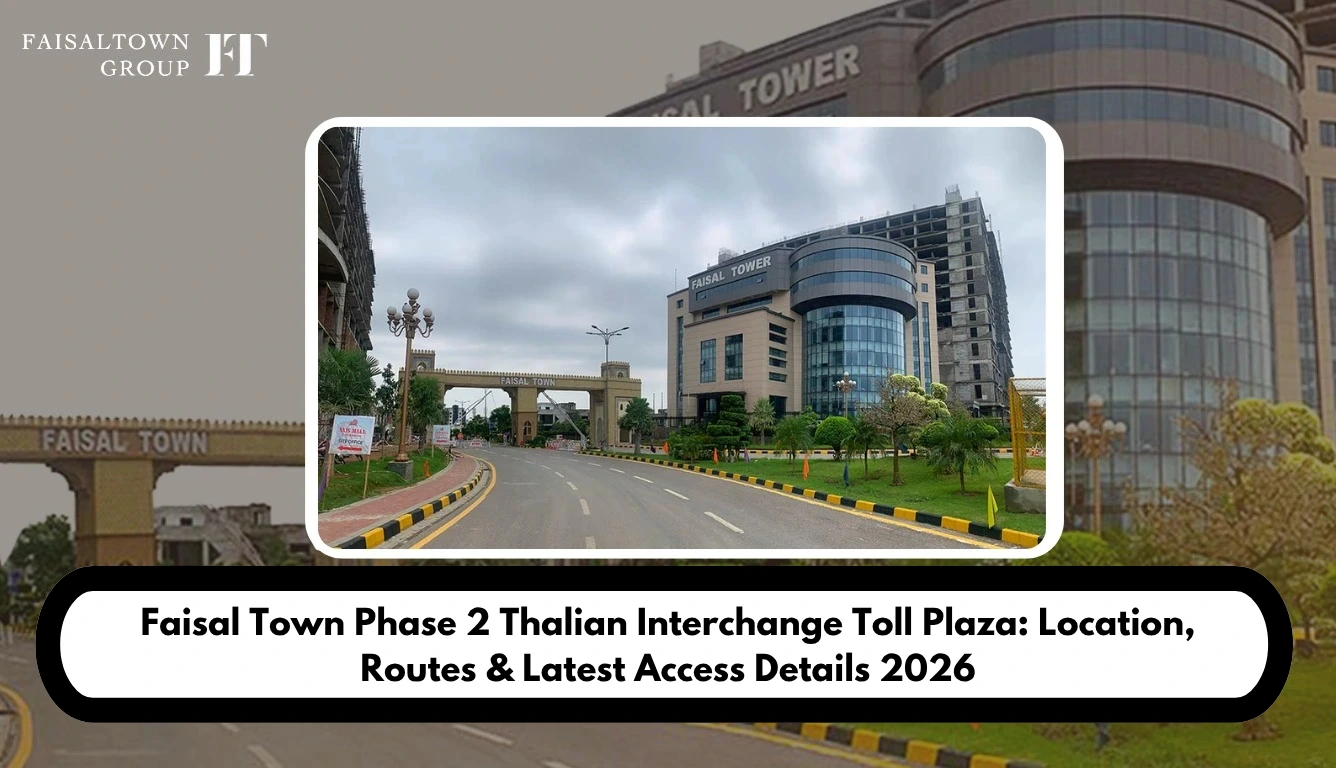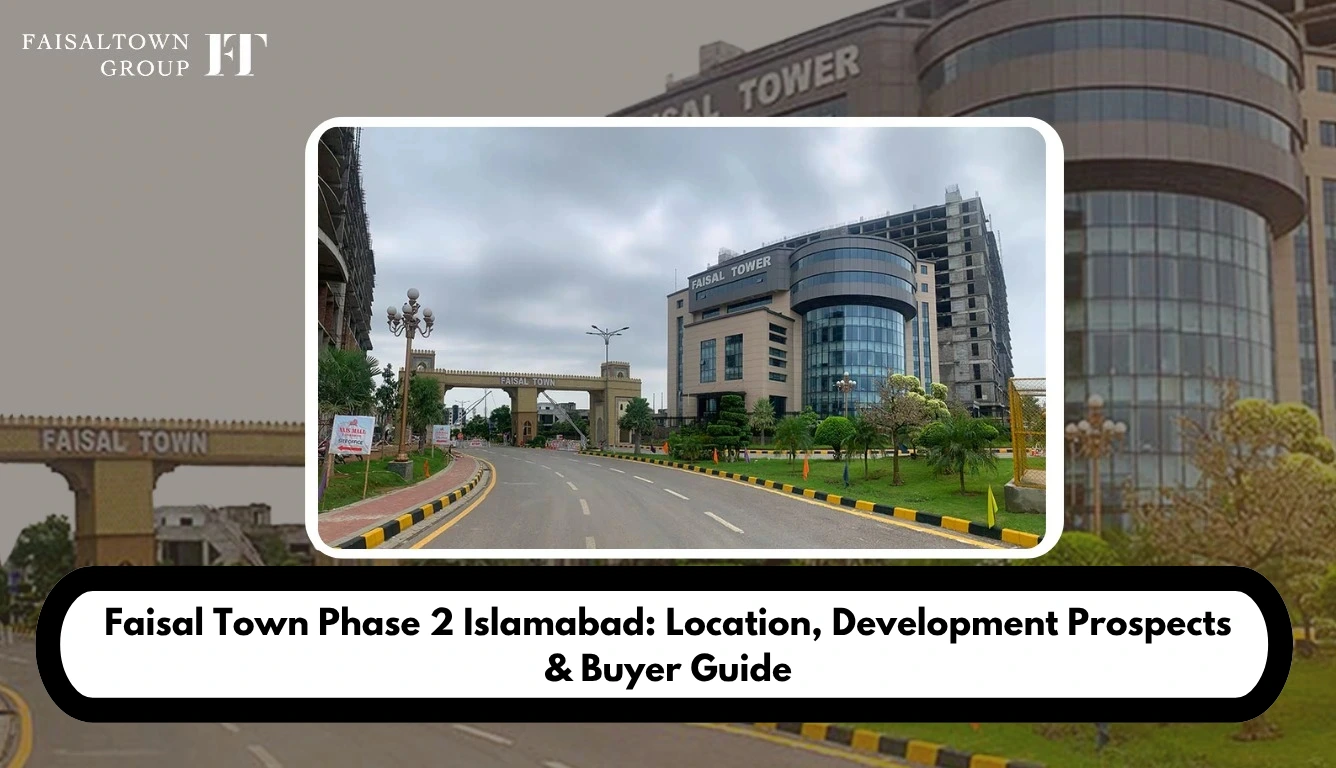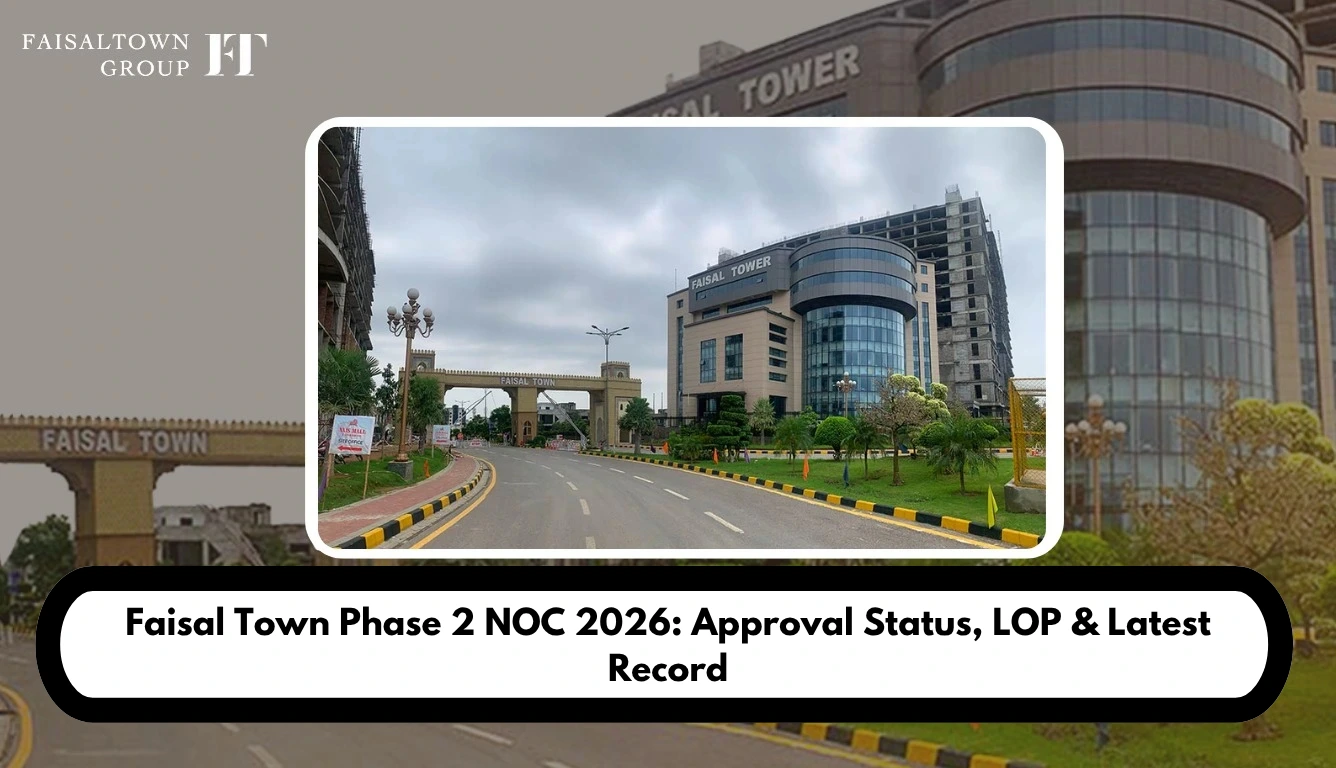
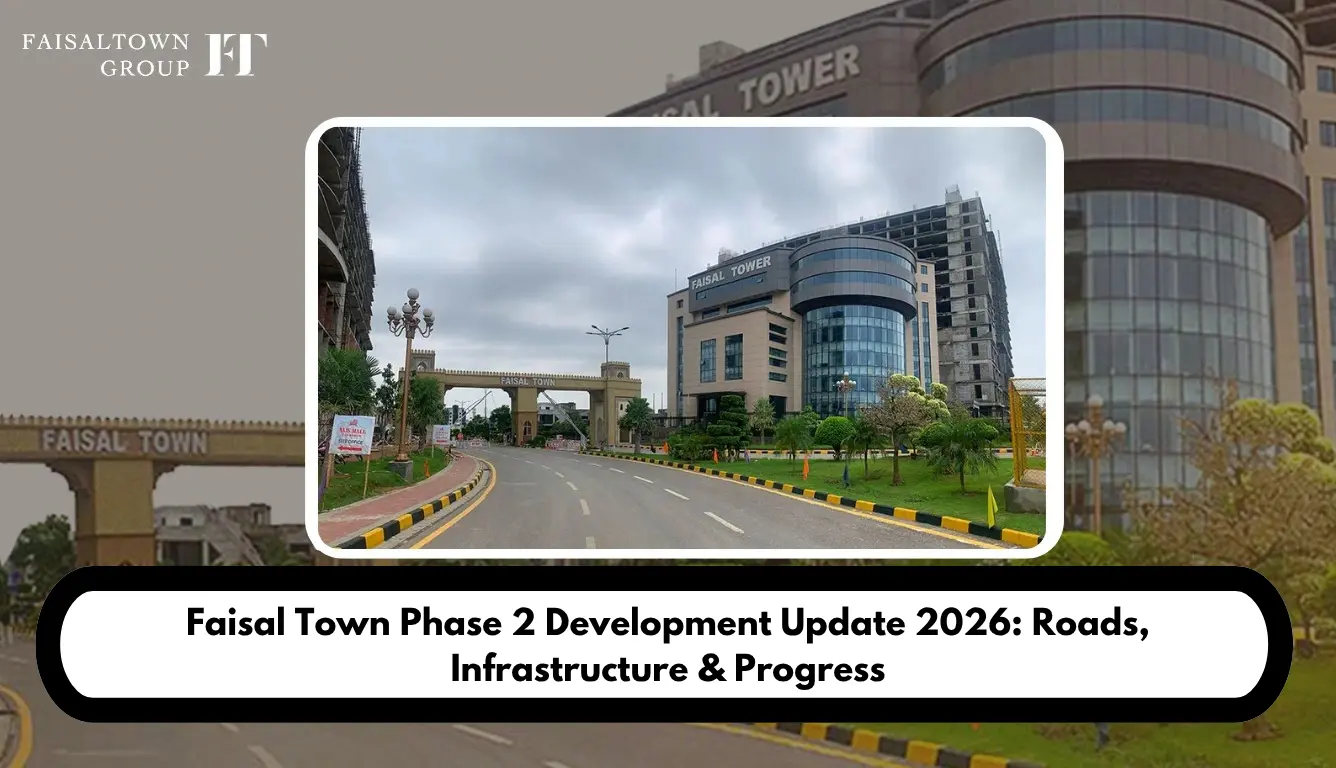
The Faisal Town Development Update 2026 looks at the current roads, infrastructure, utilities and visible progress across Faisal Town Phase 2. A recent site visit showed graded roads, fresh earthwork, half-built houses and active construction in parts of the project. However, visible work does not automatically confirm the development status of every block or service.
So that gap is what this update is about. I’ve gone through roads, infrastructure, utilities, blocks, the master plan and the lines you’ll hear at a sales office. Planned work sits in one pile, documented work in another, because once those get mixed up the buyer is the one who pays. As a result, by the end you should know what to look at on your own block and plot before any money moves.
Faisal Town Development Update 2026: Quick Status
| Development Area | What the Evidence Shows | Evidence Type | What to Check on Site |
| Main access | The developer’s material mentions access. I found no dated, independent record of the road’s condition | Developer-stated | Drive it yourself and note the width, surface and traffic |
| Internal roads | They’re on the master plan. Nobody has recorded which stretches are finished | Plan | Walk the street outside your plot |
| Road network | The plan draws the connections, but nobody has documented the physical links | Plan | Trace the route from the main road to your plot |
| Land grading | Nothing on record, block by block | Not documented | Stand on the plot and compare it with the road level |
| Drainage | Phase 2 drainage isn’t documented | Not documented | Look along the road edges and at any low spots |
| Plot demarcation | Plots appear on the plan. Markers on the ground aren’t recorded | Plan | Find the marker and match its number |
| Water | Developer material may mention it, but live connections aren’t recorded | Developer-stated | Ask where the nearest working supply point is |
| Sewerage | Planned network only, with no record of installed lines | Plan | Look for manholes and laid pipe close by |
| Electricity | No record of infrastructure or live connections | Not documented | Look for poles, transformers and meters |
| Parks | Reserved on the plan, no record of landscaping | Plan | Go and stand in the reserved area |
| Commercial areas | Marked on the plan and pushed hard in market ads | Plan, market-listed | See if any shop is open or any building is going up |
Faisal Town Development Update 2026: Overall Status
I’ll start with what I can’t give you. The evidence I had contains no completion percentage, no road length and no count of developed blocks for Phase 2. A tidy one-word verdict isn’t on offer, then. I’d rather describe it in pieces anyway, because that’s how a site actually looks when you stand on it.
In fact, sites never develop evenly. You’ll find one street properly surfaced and the next one just pegs in the dirt. A block with a few houses on it can still be waiting for working utilities, and the sales side won’t mention that unless you ask them directly.
So when somebody hands you a Faisal Town development update, push back a little. Ask which part they mean, whether that’s roads, grading, water or construction. Then ask what the proof is and when it was taken. After all, a photo from last year tells you about last year, nothing more.
Here’s a quick filter for any progress conversation.
| Indicator | The Question to Ask |
| Roads | Can you actually get to the plot? |
| Grading | Has the land been prepared? |
| Drainage | Can you see the drains with your own eyes? |
| Demarcation | Can you point to the plot on the ground? |
| Utilities | Is anything physically connected? |
| Construction | Is anyone building nearby? |
| Access | Does the road join the wider network? |
| Planning | Does the site match the current plan? |
Faisal Town Roads and Access Development
Roads are what people notice first on any site, and that’s the reason they mislead so many buyers. From one street to the next, Faisal Town roads can be at very different stages. Yet only one of them matters to you, the street outside your plot.
Faisal Town Main Access Roads
People say “access” as if it were a single thing. It’s four things really: the approach to the project, the entrance, the roads around it, and the roads inside. A good-looking entrance can sit beside an interior that’s barely started, so don’t let the gate decide for you.
Also, most travel times and route descriptions come from marketing. Until you’ve driven it yourself, call them developer-stated. Twenty minutes on a brochure and twenty minutes in Islamabad traffic aren’t the same twenty minutes.
The Faisal Town Phase 2 location page is a fair place to begin. After that, go and test it. Can you get from the main road to your plot without a wrong turn or a wheel stuck in the mud?
Faisal Town Internal Roads
Internal roads fall into two groups. The main ones take the traffic and the smaller streets reach the individual plots. In fact, the best road in the entire project won’t help you as much as the street in front of your plot.
When you’re there, check four things. Is the street formed? Paved? Does it meet the next street? Does it actually reach your plot’s frontage? In other words, one finished street says nothing about the others.
Faisal Town Roads: Planned vs Developed
A road on a map shows somebody’s intention, and that’s all. This is what each type of evidence can actually prove.
| Evidence | What It Establishes |
| Master plan | Where the road is supposed to go |
| Earthwork | The land has been physically prepared |
| Road base | Development work is underway |
| Finished road | The road is physically complete |
| Usable connection | You can really get there |
Similarly, the same ladder works for photos. A picture of fresh earthwork shows work in progress and nothing more, whatever the caption claims about a finished road.
Faisal Town Roads: What Buyers Should Check
Save this on your phone:
- Can a vehicle reach the exact plot?
- Is the street formed and usable?
- Does it link up with the main network?
- Has the surrounding land been graded?
- Can you find the plot marker?
- Is there drainage visible beside the road?
- Any signs of utilities?
Also, write down the date and take photos of the roads around your plot. You’ll be glad you did later on.
Faisal Town Infrastructure Development
Infrastructure at Faisal Town covers a lot more than road surface. A plot only becomes usable once several layers line up, and if one is missing the others can stall. So I’ll take the layers one at a time. The work includes earthwork, grading, drainage, road base, plot demarcation and utility corridors.
The evidence I have gives no completion figure for any of them. Therefore, treat each one as specific to its own area.
Faisal Town Land Grading and Earthwork
Land generally goes through a sequence: raw land, then earthwork, grading, plot preparation and finally roads. Still, finishing one step doesn’t guarantee the next will follow. Earthwork at the far end of the site, for instance, tells you nothing about whether roads will reach your block.
Next, at the plot itself, compare its level with the road. See which way the ground slopes and where rain would run off. Overall, grading near your plot is real evidence. Grading somewhere else in the project is just pleasant to look at.
Drainage Infrastructure
You find out whether drainage works during the first proper rain. It also affects the condition of the roads, access for builders and whether water collects around plots. Low spots deserve extra attention.
However, nothing in the available evidence documents the Phase 2 drainage network. Instead, walk the road edges yourself and ask where the water goes. If you can, go back after a rainfall.
Plot Demarcation and Site Development
The plot number on your paperwork has to correspond to an actual patch of land. Look for physical markers, street names and block boundaries, then check the number, size and location against the current plan.
But someone pointing at a map from across the road doesn’t count. So ask to be walked right up to the spot, and compare what you see with your file.
Faisal Town Utilities: What Is Actually Available?
Indeed, utilities deserve the slowest read in this whole piece. “Utilities included” is a sales favourite. A utility that exists on paper may not be running, and the distance between the two can be a few years. So for every service, keep four questions in mind. Is it planned? Is anything physically in the ground? Can you get a connection? Does it work when you switch it on?
Water Supply
Developer material may talk about water provision. That’s a developer-stated claim, and it doesn’t mean water reaches your plot. Then find out where the nearest live supply point is and whether it serves your block.
Sewerage
A planned network is a drawing. Installed lines are actual work, and a connection that functions is a separate matter again. On site, look for manholes and laid pipe, then ask who looks after the network.
Electricity
Check the pieces individually: poles, cables, transformers, meters and live connections. For example, hardware can stand around with no connection, and a network on paper might not exist on the ground at all. Finally, confirm what is physically connected near your exact plot.
Street Lighting and Other Services
I’ve only listed a service where some evidence supports it. Besides, copying out a developer’s amenity list to make this longer would have been pointless. If a seller mentions lighting, gas or telecom, ask to see it near your plot. The Faisal Town Phase 2 features page shows what the project advertises, so read it as project material.
Faisal Town Location and Development Context
Location is about more than the address. It also determines how you get to the site, what’s around it and how easy it is to inspect. For instance, a plot far from other construction behaves differently from one beside busy streets.
Ask simple questions. How long is the drive on a weekday, and which road do you take? What’s around the site? Nearby construction says more about whether a spot is usable than any adjective in a brochure.
The location page shows where the project sits. Once you’ve seen that, drive the access route yourself.
Faisal Town Blocks and Area-Wise Development
Blocks move at their own pace. Thus, progress in one doesn’t mean the next is in the same shape. Meanwhile, careful buyers check the block they’re buying in, and hopeful ones skip that.
Faisal Town Development Differences by Block
Blocks can differ in road condition, grading, plot markers, construction and utility work. Therefore, a project-wide claim can’t tell you what one specific area looks like.
The project site has pages for individual areas such as Q Block and P Block. Read them as project material first, then set them against what you see.
How to Assess the Exact Block
First, work through it in this order: block, street, plot, road, utilities, surroundings, documents. Every step narrows things down a bit. Then by the end you’re no longer asking about “Phase 2”. You’re asking about a single plot.
Faisal Town Master Plan vs On-Ground Development
The Phase 2 master plan shows the intended layout, which is useful. It’s still just one of four layers of evidence.
| Evidence | What It Tells You |
| Master plan | What’s intended |
| Developer material | What the developer says or markets |
| Authority record | The regulatory and planning position |
| Site visit | What physically exists |
So keep these apart. The plan shows intent, the visit shows condition, and the authority record shows where things stand regulatory-wise. A plan can be completely accurate and still not be built.
Faisal Town Development Update vs Marketing Claims
Marketing language is normal because it exists to sell. Instead, reading it carefully just helps you ask better questions, and none of what follows is an accusation.
- “Planned road” means the road is intended and not yet built.
- “Development underway” suggests work may be happening, though how far along it is stays an open question.
- “Utilities provided” leaves one thing to ask: is that planned infrastructure or an actual connection at your plot?
- “Near a major road” means you should drive the real route.
- “Commercial area” might be planned, built or already trading. Ask which one.
The developer’s own post, Faisal Town Phase II site visit, is project-published material. Likewise, treat it with the same care as any other developer statement.
Whenever you’re comparing development updates from different sources, this table helps you file each claim in the right box.
| Evidence Label | Meaning |
| Official record | Backed by an authority document |
| Developer-stated | Comes from developer or project material |
| Observed | Seen directly on site |
| Market-listed | Appears in a property listing |
| Reported | Published by another source |
| Planned | A feature meant for the future |
| Unverified | The available evidence doesn’t establish it |
Physical Development Indicators Buyers Can Verify
“Has development started?” is a lazy question, so it gets a lazy answer. Instead, look for things you can see with your own eyes.
- Roads. Can you reach the plot? Drive there. A map isn’t enough.
- Plot Markers. Can you point at the exact plot? A visible marker beats a plan every time.
- Grading. Does the plot sit at a sensible level next to the road and the land around it?
- Drainage. Is any infrastructure visible beside the road?
- Utilities. Look near the plot for poles, manholes, pipes and meters.
- Construction Activity. Sort out what you’re seeing. One house isn’t scattered building, and scattered building isn’t widespread work. Infrastructure work and lived-in homes are different things again.
- Surrounding Development. A single finished road doesn’t make a finished block. Walk the streets around your plot before you decide anything.
How to Verify the Faisal Town Development Update Before Buying
Keep this section handy during a visit. A Faisal Town Development Update is only worth something if you can test it against your own plot.
Confirm the Project and Phase
Make sure the property is in the phase you actually mean to buy in. After all, names across projects can look alike.
Confirm the Block and Plot
Check the plot number, size, category, street and block. Then find that same plot on the current plan, since older plans can differ from newer ones.
Match the Current Plan
Use the most recent plan you can get hold of. The master plan page is one source, but ask the seller which version they’re working from.
Visit the Site
Look at the road, the marker, grading, drainage, utilities and the plots next to yours. Note the date, and take photos or video if that’s appropriate.
Verify Utilities
Then ask the same four questions for each service. Planned? Installed? Connection available? Actually running?
Check Regulatory Information
Use the relevant authority’s current record. Also, don’t rely only on a dealer, a brochure or an old document. The Phase 2 NOC page covers project NOC information, and you should compare it with the authority’s own record.
Keep Documentary Evidence
Don’t throw anything away. Hold on to allotment papers, payment receipts, transfer records, maps, official letters and the photos you took yourself. If things shift later, you’ll be glad to have proof of what was true when you checked.
Faisal Town Development Site Visit Checklist
Write down the project and phase, block, street, plot number, road condition, plot marker, neighbouring plots, grading, drainage, utility infrastructure, nearby construction, access route and the date of the visit.
Development Claims That Need Extra Checking
Some phrases deserve a second look. They don’t prove anything is wrong. Instead, they simply need paper or physical evidence behind them:
- “Fully developed”
- “Possession ready”
- “All utilities available”
- “Road completed”
- “Approved”
- “NOC cleared”
- “Ready for construction”
When one comes up, run through six questions. What exactly is being claimed, and who’s saying it? What document or physical sign supports it? Does it cover the whole project or only one area? How recent is the evidence, and can you check it yourself?
What Development Progress Means for Different Buyers
Buyer Planning to Build Soon
Your list is road access, plot demarcation, utilities, construction access and the area around the plot. Try a blunt test: can a construction vehicle reach your plot? If it can’t, you can’t build yet.
Buyer Holding for Future Development
Look at documented development, physical infrastructure, the regulatory position and what has actually been built. Also, this article makes no prediction about appreciation, and nobody can promise you one.
Buyer Comparing Different Blocks
Compare the exact road, plot location, infrastructure, utilities, nearby construction and documents. An update that sounds identical for two blocks could be hiding a real difference.
Buyer Considering a Market-Listed Plot
An asking price tells you very little. Check the exact plot, ownership, transfer status, block, development, access and utilities, and verify the seller’s documents as well. The plot prices post and the payment plan page cover pricing and terms. In short, a listing is market information and doesn’t count as development evidence.
What This Faisal Town Development Update Can and Cannot Confirm
This article separates documented claims from observed development, planned infrastructure and market information. It also gives you a method for checking whatever remains.
However, it can’t describe every plot. No general article could, and that’s exactly why plot-level checking matters. Still choosing between a file and a plot? The Faisal file vs plot post covers that decision, and the Faisal Town buyer guide walks through the wider process.
Faisal Town Development: Confirmed vs Needs Verification
| Factor | Evidence Position | Buyer Action |
| Project layout | Shown on the master plan | Match it with your documents |
| Roads | Planned and finished sections differ | Visit the exact street |
| Infrastructure | Nothing documented by block | Inspect the site |
| Water | Connections aren’t documented | Ask for proof of live service |
| Sewerage | Installation and operation aren’t documented | Look for manholes and lines |
| Electricity | Physical connections aren’t documented | Check poles and meters |
| Block development | Area-specific | Visit the exact block |
| Plot demarcation | Plan and site have to match | Find the plot marker |
| Future facilities | Planned | Don’t assume they’re built |
| Regulatory status | Depends on the current authority record | Check it independently |
Conclusion
Phase 2 develops differently from one area to the next. Roads, infrastructure, utilities and blocks each sit at their own stage, and the evidence can’t support a single label for the whole project. That’s the reason this update keeps them apart.
The plan shows intent. Likewise, developer material shows what the developer says, and the authority record shows the regulatory position. Only a site visit shows what physically exists, so line up all four before you trust any claim.
The real question isn’t whether Phase 2 is “developed”. Instead, it’s what has actually been completed at the exact block and plot you’re looking at.
FAQs
Q1: What is the latest Faisal Town Development Update for 2026?
Ans: The available evidence gives no single completion figure for Phase 2. Instead, roads, grading, utilities and blocks each need a separate check. Developer material describes progress, so confirm it on site.
Q2: Are Faisal Town roads fully developed?
Ans: The evidence doesn’t confirm that. A road on the master plan is only the intended layout. So check whether the street outside your plot is formed, paved and connected.
Q3: What is known about Faisal Town infrastructure?
Ans: Grading, roads, drainage and plot development are separate items, and the available evidence gives no coverage figures for any of them. So inspect each one near your plot.
Q4: Are Faisal Town utilities available on the ground?
Ans: A planned utility isn’t a working connection. So ask whether water, sewerage and electricity are planned, installed, connected or running at your exact plot.
Q5: Does the Faisal Town master plan prove development is complete?
Ans: No. It shows the intended layout, and it can’t prove that roads or services exist unless physical evidence backs it up.
Q6: Does every Faisal Town block have the same development level?
Ans: Not necessarily. Blocks can differ in roads, grading, markers, construction and utilities. So check the exact block and street.