Faisal Town Ring Road: What It Means for Phase 2
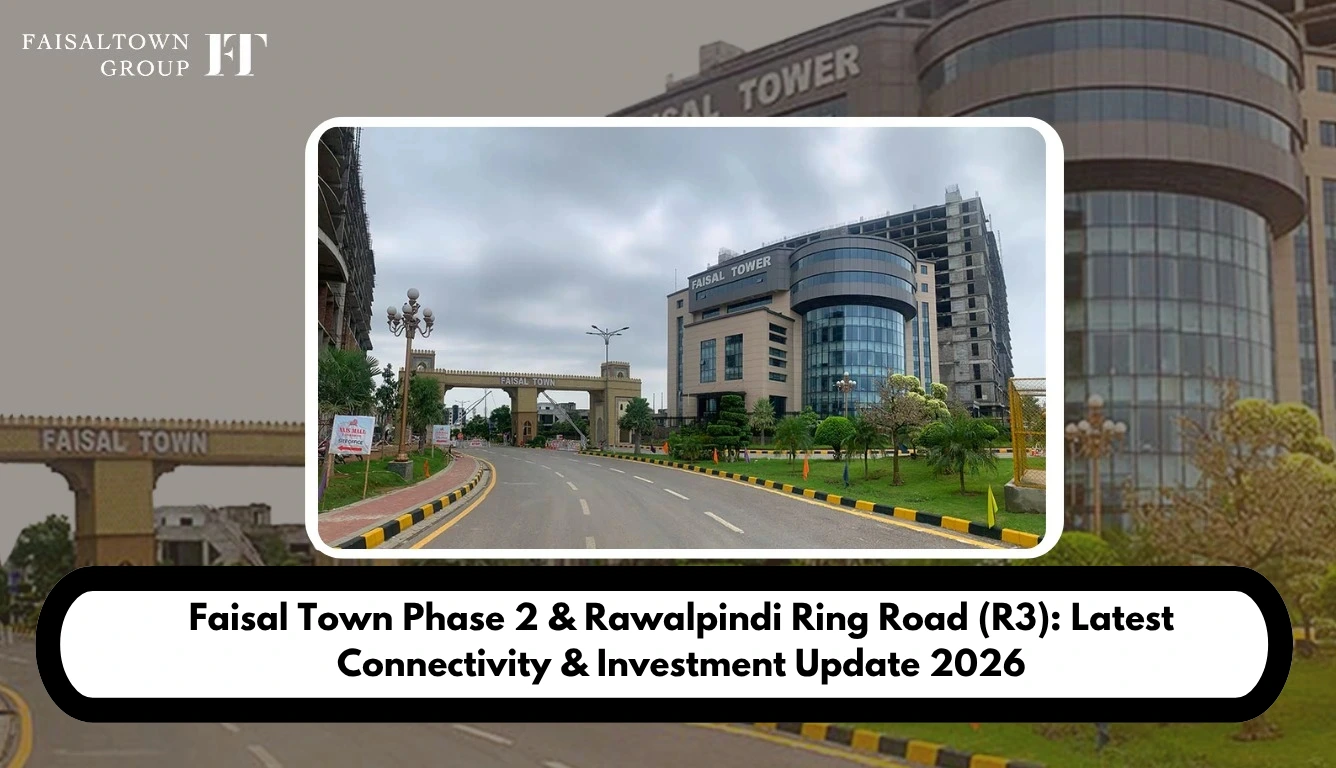
Faisal Town Ring Road is an important connectivity factor for Faisal Town Phase 2, especially for buyers looking at access to Rawalpindi, Islamabad, and the wider motorway network. But how useful this connection actually is depends on the route, road conditions, and access from a specific plot.
Fair question. Does the Faisal Town Ring Road connection genuinely make the society easier to reach, or is it just something agents say because it sounds impressive on a call? A lot of marketing leans toward the second version, honestly. There’s a huge gap between a road that exists on a government drawing and a road you can put your car on right now, and that gap is exactly where buyers get burned.
So this piece tries to draw that line clearly. What’s actually built, what’s still just lines on paper, and what the Rawalpindi Ring Road really offers Faisal Town Phase 2 as of 2026. No sales language. Just what an investor or a home buyer should check with their own eyes before letting R3 factor into a decision worth this much money.
Faisal Town Ring Road: Understanding the R3 Connection
R3 is part of a larger ring road plan wrapped around Rawalpindi and Islamabad, meant to pull heavy traffic out of the city centers. Simple idea on paper. If your society sits near this loop, you’re supposed to get faster regional travel without crawling through downtown traffic every single time.
Faisal Town Phase 2 is still building out its own roads while all this regional infrastructure develops around it at the same time. Two projects growing together, basically. Once the regional access actually works, it can change how fast residents reach the motorway, how commercial activity shows up nearby, and how outsiders view the location when they’re comparing societies.
Here’s the catch though. Something looking close on a map is not the same as being a short drive away. Plenty of plots sit near the Ring Road corridor visually but still need a good few kilometers of local road before actually touching an entry or exit point on R3. What matters is the real route, not the straight line a brochure draws for you.
How Faisal Town Ring Road Connects With Faisal Town Phase 2
There’s no single clean road linking the two. It’s a chain: plot, internal society road, main link road, then finally the Ring Road. Each link in that chain eats into your commute time, and that’s usually the part nobody mentions upfront.
Junctions matter a lot more than people give them credit for, especially in peak hours. Two routes can both get called “connected to R3” while one has a single turn and the other winds through three junctions. Completely different drives, same marketing line.
If this connectivity story genuinely matters to your decision, go see it yourself. Drive it. Or at the very least pull up a recent master plan next to satellite images before assuming the road access is as clean as it sounds on a brochure.
Faisal Town Ring Road: Location and Route Context
Step back for a moment. This project was never built around one housing society. It’s regional by design, meant to cut congestion between Rawalpindi and Islamabad and give people a way around both cities, particularly useful for anyone heading toward the motorway or the airport.
Because it serves that bigger purpose, several projects along the corridor benefit, not just Faisal Town Phase 2. Which actually helps buyers keep expectations in check. Whatever value R3 eventually creates gets shared across multiple developments in the area, so it’s unlikely any single society captures it all on its own.
Then there’s timing. Big road projects in Pakistan run late, more often than not. Land acquisition drags. Funding comes in phases. Construction sequencing rarely follows the original schedule. Treating a half finished road like it’s already operational is one of the easiest and most common mistakes a buyer can make, and a little digging usually fixes it.
Thalian Interchange and Faisal Town Phase 2
Thalian Interchange gets brought up constantly around Faisal Town Phase 2, mostly because of where it sits on the motorway network, linking M-2 with the surrounding regional roads. Fair enough, it’s a real reference point for anyone thinking about longer trips out of the society.
But it isn’t a magic fix by itself. How far the interchange sits from your plot, what condition the roads leading to it are in, and how much traffic piles up at that junction, all of that decides whether it’s actually useful on an ordinary Tuesday morning.
Somebody who only checks “distance to Thalian Interchange” and skips the road quality in between is working off half the picture. Distance on its own tells you almost nothing about how long the drive really takes.
Faisal Town Ring Road Connectivity: Roads That Matter to Buyers
This is the part buyers actually care about, once the excitement of the regional road story wears off and they start thinking about their own commute.
Local roads inside and around the society come first, always. After that, Ring Road connectivity is one option among a few, next to the Thalian Interchange route and access to M-2 Motorway. Between the three, you get a sense of how convenient the location really is for reaching Islamabad, Rawalpindi, and the markets in between.
And this is where theory stops matching reality. A route can look short on Google Maps and still take twice as long during rush hour, especially if construction is going on somewhere along it or the local roads simply weren’t built for this much traffic. If you’re planning to live here, not just hold the plot, drive the commute yourself, at the actual time you’d be driving it.
Ring Road Connectivity vs Actual Road Access
Straightforward question: does being connected to the Ring Road automatically mean an easy commute? Not really. It comes down to more than just being near it.
Road condition matters. A newer stretch of road drives faster than an older, worn one, obviously. Route length matters too, since being “technically connected” doesn’t stop you from taking a long detour if the direct link isn’t finished yet.
Traffic, the number of junctions, what kind they are, where you actually enter and exit, all of it shapes what this connectivity feels like in real life. And this is the bit people skip over most: two plots in the same society can have completely different access, so hearing “Ring Road access” attached to a society name doesn’t mean much without knowing which block you’re talking about.
Faisal Town Ring Road and Property Impact on Phase 2
Once you’ve got a handle on the connectivity side, the next thing is figuring out what it might do to prices and demand. Better roads can lift buyer interest, ease of access, commercial activity, and resale demand over time. Can. Not will, and definitely not automatically.
Let’s be blunt. Nobody credible should be telling you prices will double because of R3, or that appreciation is guaranteed. Property values move based on a mix of things, and infrastructure is just one piece, sitting alongside current plot prices, how fast development is moving, and whatever the general market mood happens to be.
Can Rawalpindi Ring Road Increase Property Demand?
Both sides have a point here, and pretending otherwise doesn’t help anyone making a real decision.
On the upside, easier commuting genuinely pulls in buyers who’d previously written the area off because of travel time. Better connectivity also tends to feed commercial growth nearby, and that growth adds its own pull over the years.
But a few things can hold this back too. Delays push the real benefit out by years, sometimes. Plans change mid-construction and shift which areas actually get direct access. Traffic at key junctions can quietly cancel out the advantage even once the road is open. And honestly, how fast Faisal Town Phase 2 develops on its own terms will keep mattering just as much as R3 does, maybe more.
Faisal Town Ring Road and Investment Potential in 2026
For investors, treat the Ring Road as one input, not the whole decision. Current prices, how far development has actually come, the plot’s exact location, road access, how long you plan to hold it, buyer demand, resale potential, all of these need to sit on the table together before anyone signs anything.
It also helps to read up on progress that’s actually verifiable instead of taking someone’s word for it. A quick look at the ongoing site development coverage gives a more grounded starting point before adding the Ring Road story on top.
Short-Term Investment Considerations
Short-term buyers jump on infrastructure news fast, and that reaction alone can create speculative demand long before the road is anywhere close to done. Prices can spike quickly on that kind of sentiment, but sentiment flips just as quickly if the timeline slips or progress visibly stalls.
Buying purely because of what R3 might become someday, without checking what’s actually happening on the ground right now, is probably the single most avoidable mistake short-term buyers make in this market.
Long-Term Investment Considerations
Long-term investors have the advantage here, mostly because things like finished infrastructure, real traffic patterns, population growth, and commercial buildup take years to actually show up. Demand builds slowly as these pieces fall into place, not overnight.
For this group, patience and checking in on progress every so often beats betting the whole decision on one infrastructure headline.
Is Faisal Town Phase 2 a Good Investment Because of R3?
Straight answer, no sales pitch: R3 alone shouldn’t be why anyone buys here.
For Long-Term Investors
Think about how long you plan to hold, how fast infrastructure is actually moving, where accessibility is likely headed, and how the society overall is progressing. A detailed investment overview is worth reading before putting money down.
For Home Buyers
Daily commute, practical work routes, how close schools and hospitals are, access to markets, general travel convenience, these are the things that shape actual day to day life. They matter more than a road that might still be years away from finished, no matter how good it looks in the plans.
For Overseas Buyers
Overseas buyers take on more risk simply because they can’t walk the site or drive the route before deciding. Confirming the exact plot location, current road access, real development status, the actual route to major roads, and where the market stands right now isn’t optional. It’s the bare minimum. Looking through overseas enclave details and cross-checking with a proper buyer guide, instead of just trusting whatever one local contact says, costs almost nothing and saves a lot of regret later.
What Buyers Should Verify Before Investing
Not exhaustive, just practical. Applies whether R3 is your whole reason for buying or just one piece of a bigger picture.
- Verify the actual driving route from the plot to the Ring Road, not the distance shown on a map.
- Check the exact plot location against the official master plan.
- Go inspect current road conditions along the route yourself if you can.
- Check access toward Thalian Interchange and count the junctions along the way.
- Look at M-2 Motorway access and realistic travel time, not the theoretical number.
- Keep completed infrastructure and planned infrastructure separate in your head before valuing either one.
- Confirm current on-ground development, including features and approved NOC status.
- Compare pricing with nearby projects, like this comparison with Capital Smart City.
- Be honest with yourself about your holding period, since short-term and long-term goals need different strategies.
- Visit the area before signing anything, even if it’s one trip you’d rather skip.
What Rawalpindi Ring Road Can, and Cannot, Guarantee
Setting the right expectations early saves a lot of disappointment down the line.
What R3 Could Improve
Regional connectivity, day to day accessibility, more travel options for residents, interest from buyers outside the area, and commercial activity along the corridor as things mature. All realistic. All possible.
What R3 Cannot Guarantee
No road, including R3, can guarantee property appreciation or resale profit. It also cannot guarantee faster travel from every point in the society or a fixed return. If someone tells you otherwise, they’re selling you something, not informing you.
Faisal Town Connectivity: Reading the Route Correctly
A lot of buyers mix up map distance with real driving distance. They’re not the same thing, not even close sometimes.
Direct access means few turns, decent road quality the whole way. Indirect access means using several local roads before reaching the main connection. This can add travel time, even when the map shows a short distance. Knowing which one your plot falls under matters before you assume anything about connectivity.
Peak-hour traffic rarely appears in brochures, yet it can change the entire commute. A drive that’s fifteen minutes at noon can turn into forty-five during rush hour, especially near the busier junctions.
Best approach: check the route starting from the actual plot, not the society’s front gate. Travel time shifts depending on which block or sector you’re in. If you’re eyeing a specific area, the sector pages give more precise location detail before you draw conclusions.
Final Verdict: Faisal Town Ring Road and Phase 2
Rawalpindi Ring Road can matter for Faisal Town Phase 2. It’s not nothing. But it shouldn’t be the whole reason anyone invests here. Its value depends on how much of the route is complete and how directly a specific plot connects to it. The surrounding market will also shape its impact over the next few years.
Quick recap. Today, connectivity depends on what’s finished and what’s still planned. Ring Road access and Thalian Interchange both play a part, but need checking case by case. M-2 Motorway access adds another layer worth knowing about. Development status keeps shifting. Demand depends on way more than roads alone. Your investment timeline should reflect your own goals, not a generic answer that applies to everyone.
The recommendation stays the same it always was: check the current route and development status yourself, or through someone you actually trust, before letting R3 shape any decision about future value. Infrastructure is worth watching closely, sure, but it works best as one part of a well-researched call, not the entire basis for one. If you’re still going back and forth, comparing a Faisal File against a plot or reaching out through the contact page for a current site visit is a reasonable next move.
FAQs
Q1: Is Faisal Town Phase 2 connected to Rawalpindi Ring Road?
Ans: It sits near the R3 corridor, and regional links are expected to improve access over time. Still, check the current on-ground route yourself rather than trusting planned connections that haven’t been built yet.
Q2: What is the Faisal Town Ring Road connection?
Ans: It’s about how local roads in Faisal Town Phase 2 connect to the wider Rawalpindi Ring Road network. The network is designed to ease regional traffic and improve travel between Rawalpindi and Islamabad.
Q3: How does Rawalpindi Ring Road affect Faisal Town Phase 2?
Ans: It can improve accessibility, buyer interest, and nearby commercial activity. However, the impact depends on construction progress, route completion, and plot-level access.
Q4: How does Thalian Interchange benefit Faisal Town Phase 2?
Ans: It links the surrounding roads with M-2 Motorway, giving residents one more access point. Its usefulness depends on the route and travel time from a specific plot. Map distance alone is not enough.
Q5: Does Ring Road connectivity increase property value?
Ans: It can support demand by making access easier, but it doesn’t promise higher prices on its own. Value depends on several things together, development pace, exact location, and market conditions, not roads alone.
Q6: Is Faisal Town Phase 2 a good investment in 2026?
Ans: Depends on your goals, holding period, and how much risk you’re okay with. Check current plot prices and verified development status yourself rather than deciding based on infrastructure promises alone.